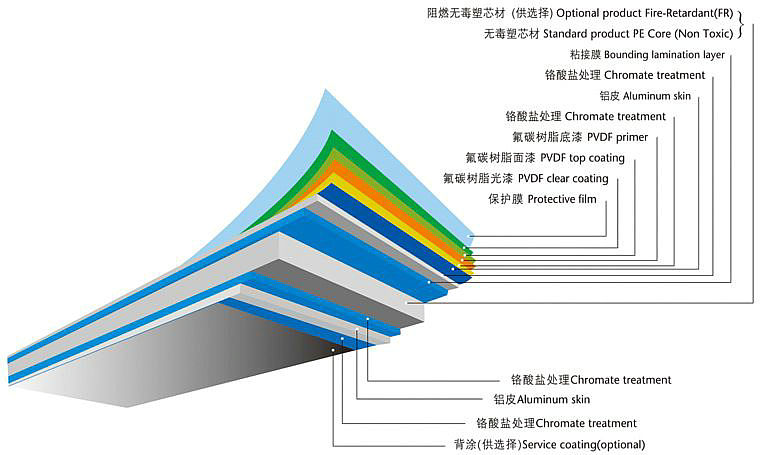
Aluminum Composite panel is a type of flat panel that consists of two thin aluminium sheets bonded to a non-aluminium core. ACPs are frequently used for external cladding or facades of buildings, insulation, and signage.[3] If the core material is flammable, usage may be problematic as a building material and some jurisdictions have banned their use.
Aluminum sheets can be coated with polyvinylidene fluoride (PVDF), fluoropolymer resins (FEVE), or polyester paint. Aluminum can be painted in any kind of color, and ACPs are produced in a wide range of metallic and non-metallic colors as well as patterns that imitate other materials, such as wood or marble. The core is commonly low-density polyethylene, or a mix of low-density polyethylene and mineral material to exhibit fire retardant properties.
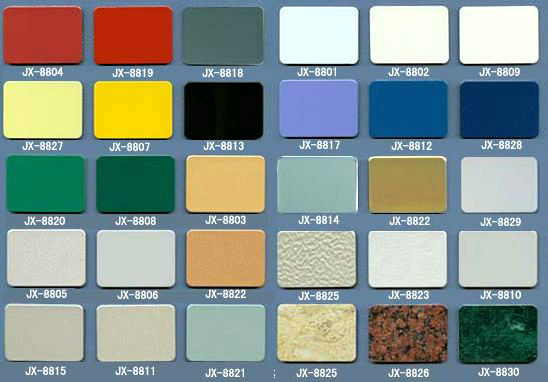
ACP is mainly used for external and internal architectural cladding or partitions, false ceilings, signage, machine coverings, container construction, etc. Applications of ACP are not limited to external building cladding, but can also be used in any form of cladding such as partitions, false ceilings, etc. ACP is also widely used within the signage industry as an alternative to heavier, more expensive substrates. These structures made optimal use of ACP through its cost, durability, and efficiency. Its flexibility, low weight, and easy forming and processing allow for innovative design with increased rigidity and durability.
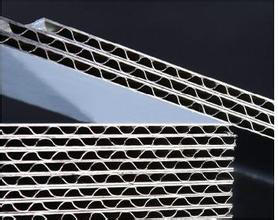 The core sheet of the aluminum corrugated sheet is of the water ripple shape, which forms an air passageway between the front panel and rear panel, that is, a hollow system, so that the sheet is among the best products for heat insulation. Under the action of solar radiation, the air in the passageway rises in temperature and flows upwards, taking the heat away and having the performance of insulating against heat. In a cold area, the sealing of the upper and lower ends of the corrugated passageway in sunlight in the daytime helps store heat energy and reduce the running off of indoor heating, having the performance of heat insulation. The remainder of the corrugated sheet in engineering can be recovered by 100%, being environmentally-friendly and pollution-free.
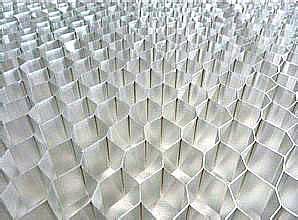 Impact resistance can be accounted for by adjusting the honeycomb cell size, utilizing different core materials and skins, or adding thickness to the surface material and/or core. Moisture Resistance All types of aluminum and plastic honeycomb cores can be used to improve water and moisture resistance, but RFP surface materials can also do the job for many applications. Corrosion Resistance Not only can we utilize different core and surface materials to achieve resistance to weather and chemicals, but coatings can be applied for added security.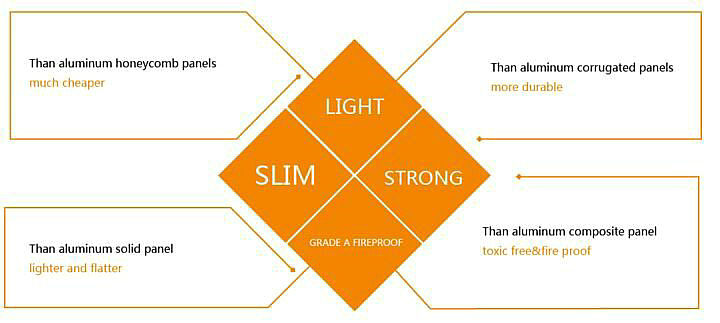
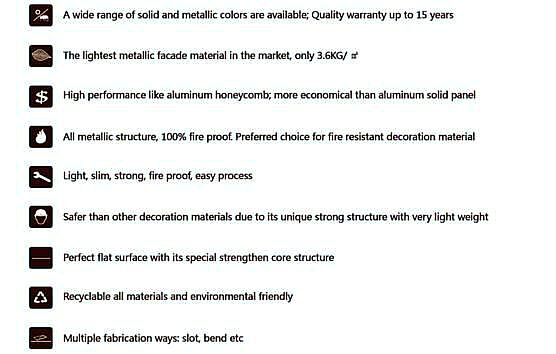
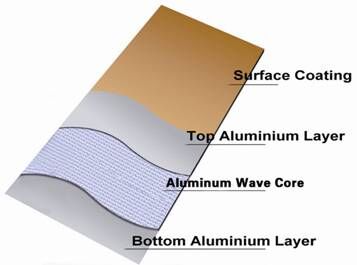 Continuing environment protection is one important corporate culture for Firewalbond. With this, Firewalbond commit itself to research and develop and finally create an innovative green product called ALCP with Grade A fire resistant and fully recycled.Firewalbond ALCP is consists of all aluminum materials, both the core aluminum wave sheet and its covers on top and bottom can be recycled and used for the production of new material.